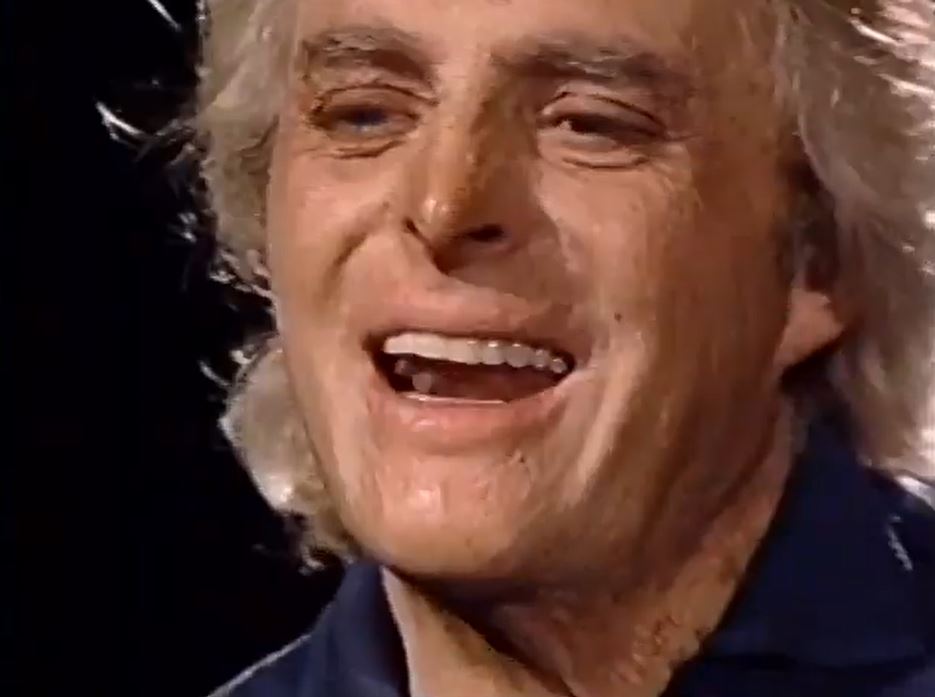
Richard Lynch, star of ‘Steel,’
reportedly died of
heart attack at home
Hollywood actor Richard Lynch was found dead at age 72 at his home on Tuesday, June 19, 2012.
Accounts by the Los Angeles Times and San Bernardino County Sentinel state that Lynch’s home was in Yucca Valley, California. His home was reported by The Associated Press, Hollywood Reporter, Reuters and BBC as being in Palm Springs, California. Yucca Valley is 20 miles north of Palm Springs.
A funeral home obituary lists date of death as June 19, 2012.
A paid obituary for Lynch in the New York Times dated July 29, 2012, said he “died peacefully at home of a heart attack” on June 19, 2012. That notice does not include a place of death. Lynch’s full name was Richard Hugh Lynch.
Lynch’s body was discovered by Carol Vogel, a friend and actress close to his age. A 2017 article by the San Bernardino County Sentinel on Vogel’s death, without citing sources, said “Lynch’s body was found in his home in Yucca Valley by Carol Vogel on June 19, 2012, after having died on either June 18 or June 19.”
It said that Vogel discovered the body because she hadn’t heard from him “for several days,” went to his home, and “found the door to his home open and his body in the kitchen.”
That article said Vogel tragically died five years later under somewhat related circumstances — she had been reported missing Nov. 22, 2017, and three days later, an off-road rider spotted her disabled truck, and “she was found dead in a dirt field behind a house on Luna Vista Lane in the Flamingo Heights district of Yucca Valley.”
That article said, “For the second time in just over five years, one of the Hollywood expatriates who located in Yucca Valley in the twilight of his or her career has died in an unexpected circumstance at home.”
Vogel’s credits are primarily in TV. She appeared in the final season of “Gunsmoke” and had appearances in “Hawaii Five-O,” “Serpico” (the TV series) and “Wonder Woman.”
The Associated Press published a short obituary on Richard Lynch that was picked up by The New York Times. The Hollywood Reporter also published a short obituary. Variety posted the Associated Press obituary, which stated, “His representative, Mike Baronas, said that ‘from what I currently understand, no investigation into the cause of his death will be made as his body was sent directly to a funeral home.’”
Citing Baronas, a Reuters obituary said Lynch’s home was in Palm Springs and that Vogel found his body “cold and lifeless” on the kitchen floor. That obituary, and the one by the BBC, said Lynch was 76 and born in 1936; other sources including the paid New York Times death notice say he was 72 and born in 1940.
Lynch was a prolific actor whose most prominent credit perhaps is TV’s “Battlestar Galactica.” Obituaries listed films including “Scarecrow,” “Bad Dreams” and “The Sword and the Sorcerer.”
None of them mentions “Steel.”
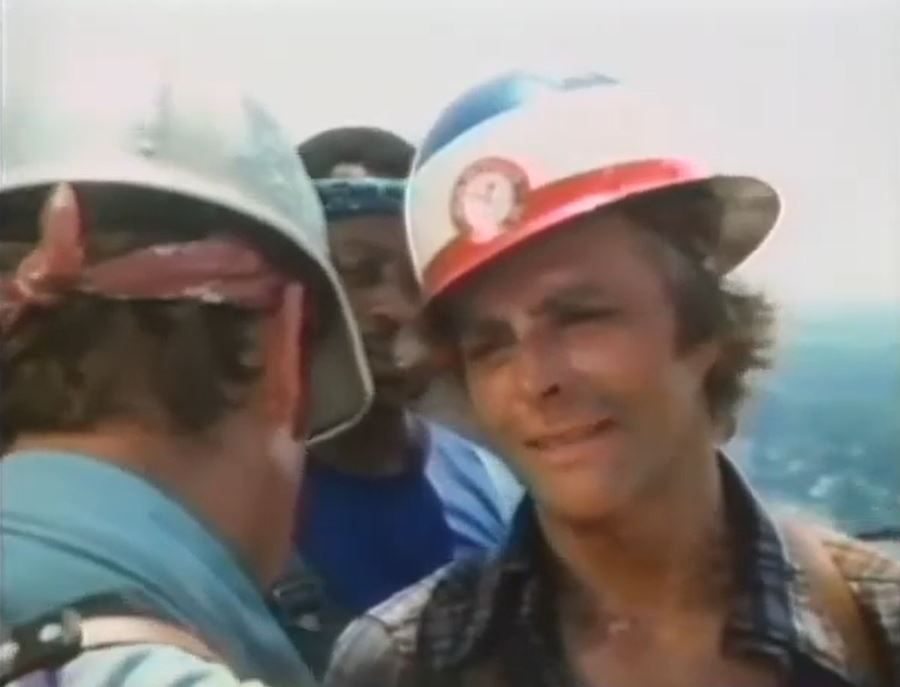
One of the undeniably great titles in film history, “Steel” is a 1979 B movie starring Lee Majors. It is a B movie only by definition, not by quality. It is a sensational tribute to America’s ironworkers who make these great buildings rise in our great cities and features a Magnificent 7 of sorts who are recruited/compelled by Majors’ character, the emotionally wounded Mike Catton, to finish an impossible construction project and perhaps exorcise some personal demons.
Richard Lynch, as Dancer, is one of those Magnificent 7 and the most skeptical of Catton and thus earns an outsized role. He is the only one to figure out Catton’s troubling secret. His duel with Catton and the outcome it inspires is one of the great moments of ’70s film.
“Steel” is also exceptional work by Majors and happens to include a couple of Oscar winners — George Kennedy and Art Carney. Quentin Tarantino has praised the film and the characterization by Lynch.
So why has the film been unavailable for decades? Somehow, “Steel” failed to find a theatrical audience, and most disappointingly, this superb five-letter title actually underwent a few changes, before and after. When the movie aired on NBC in September 1982, the title had somehow been changed to “Men of Steel.”
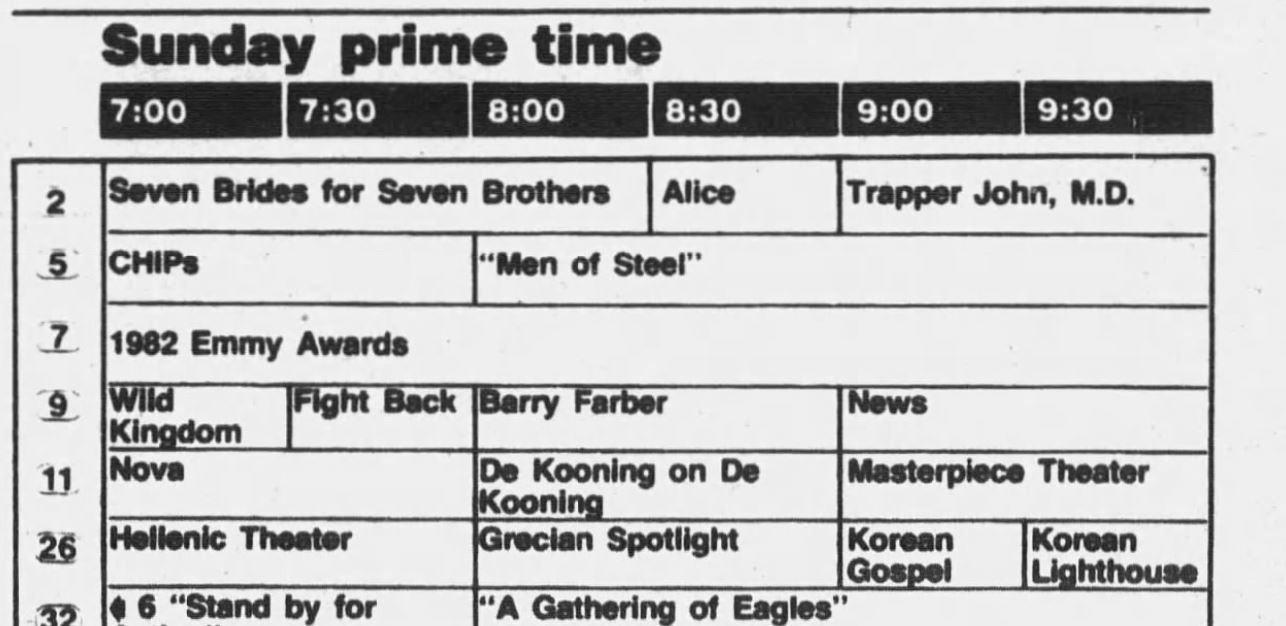
“Steel” was changed to “Men of Steel” for NBC in 1982
Before acting, Lynch like many actors of his generation served in the military, with the Marines. A 1971 article by the Associated Press recounted how Lynch in 1967 was badly burned in “gasoline-soaked clothing” when he ignited himself in Central Park. “I was on all kinds of drugs,” he is quoted as saying.
The article said that Lynch vowed to survive, endured numerous skin grafts, and four months after the burning, had kicked his drug habit.
Obituaries said that Lynch was typically cast as the heavy because of scars from the burning. The 1971 AP article says “His face shows only slight scars,” but the skin grafts “left their mark over much of the rest of his body.”
As Dancer in “Steel,” Lynch has a decided edge, but he is not a villain.
The Associated Press obituary published by Variety says, “Lynch was twice married,” first to Beatrix, and then, “He is survived by second wife Lily and his brother Barry Lynch, also an actor.”
That may be true, but the absence of a wife during a death of these circumstances certainly is curious. Presumably, if they were married at the time of his death, they were living apart. It’s possible she could have been traveling. But his paid death notice in The New York Times makes no mention of a wife. It said, “He is survived by his sisters, Carole J. Taylor and Cathy L. Jones, his brother Barry J. Lynch and many other loving relatives. He is predeceased by his beloved son, Christopher L. Lynch.”
It said, “A memorial service was held at Hollywood Forever Funeral Home on June 24, 2012.”
How it could be known that Richard Lynch died “peacefully,” as that death notice states, is not clear. It feels like the world let down Richard Lynch. The circumstances of his death are tragic. Whether it could’ve been prevented had he not been alone can only be speculated. We live forever in the moment. Those moments don’t always include other human beings. When stricken, Richard Lynch had to know he had fans who appreciate his work. He may have been surprised that a tribute post 14 years after his death would salute his unforgettable performance in “Steel.”
(November 2026)