
Elizabeth Holmes has no interest in curing diseases
“You Can See Everything” is far more access than movie. It has much in common with reality TV shows. For many filmmakers, it would be the equivalent of an elongated “60 Minutes” interview. Because of its creativity, its one of the most significant films of the decade, if not century.
Very few famous people would agree to this kind of intrusion in their lives. A couple reasons why Elizabeth Holmes and Billy Evans might: 1) Remind a person with pardon power that she’s in jail, and 2) Remind everyone else that she’s got small kids. Either of those factors could affect the amount of time she serves.
Another reason for doing it is suggested in the film. That particular reason will become the centerpiece of the drama, but it still seems like less of an incentive for the subjects to allow this production than the two reasons above.
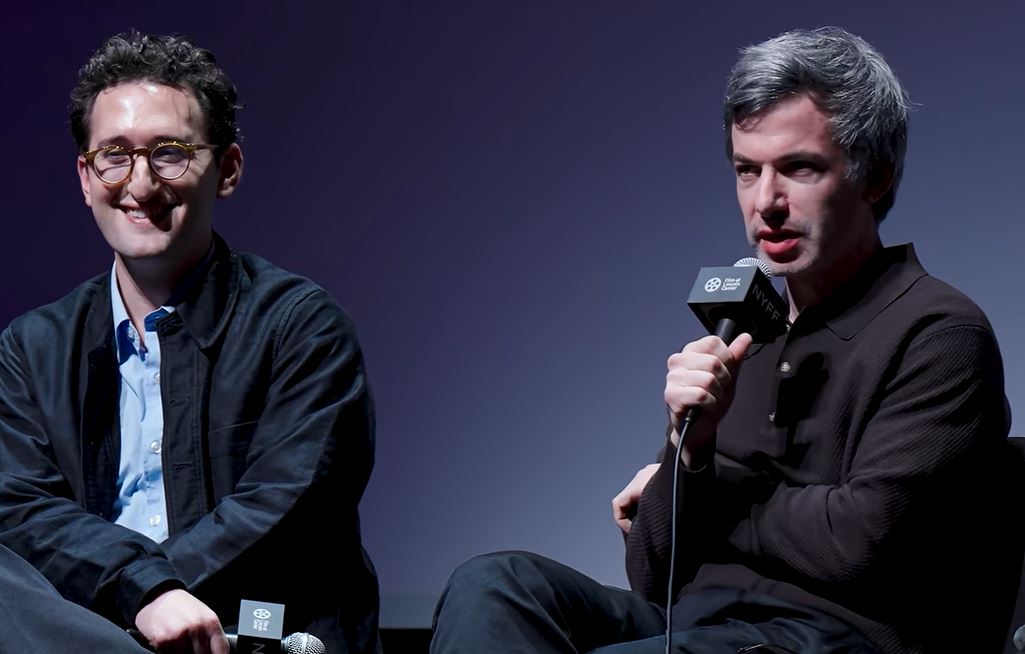
Nathan Fielder, the co-director of the film, is on camera probably more than Holmes is. There is certainly an argument that “You Can See Everything” is a film about Fielder, not Holmes.
He freely admits early he doesn’t know anything about this science, a bad revelation on his part. He says he might be a patsy in agreeing to this. It’s a dumb thing to admit to viewers but helpful for the persona he’s got here.
So that could be the real movie here: Up-and-coming filmmaker gets handed a plum job, is concerned he’s being used, finally seizes control of the project by figuring out what’s going on.
That’s not quite what happens. Here’s a more conventional approach that would be intriguing: That Elizabeth Holmes is a smart woman who has been taken advantage of by men in her adult life, and this will be shown in real time and in flashbacks as she reports to prison. (That is not necessarily the view of this page.) Fielder bails on that idea, though. The strongest argument would be the term “power of attorney.” There may be valid legal reasons for that unexplored by Fielder. (This film does provide compelling evidence not to trust what you see on “verified” social media accounts.)
Fielder is not concerned about the details of Holmes’ case. He doesn’t even appear to know what those details are. (It’s complicated: She was convicted of a few things, acquitted of a few others, and got a “no verdict” on a few others.) He is only concerned about whether she feels guilty. That’s a fair approach He doesn’t connect. His questions are far less than impressive. He overestimates his ability to elicit a revelation. Time is wasted in Fielder’s curious approaches including explaining the “Who’s on first” routine.
If you’re the filmmaker, you are surely hoping for an admission. From the beginning, Fielder gets only defiance, common among defendants. A convicted person insisting they are innocent is not newsworthy or filmworthy. The way a convicted person and her significant other live? Possibly filmworthy, possibly not. The problem, you don’t know until you’ve been there a while. Fielder evidently thinks that difficulty in figuring out the bed is filmworthy.
What’s not in this film ... we never see any friends of Holmes. Did they all jump ship? Nor, with the possible exception of one phone call, do we see anyone advising her on the prison stint to come, which surely would be top of mind at the time this filming is taking place. There have been suggestions that the home shown in the film is lesser digs than where Holmes and Evans actually were living. Evans is never asked, “Your significant other is going away to jail, isn’t that tearing you up inside???” (Whether Holmes and Evans are married is unclear and should’ve been an obvious question by Fielder.)
One sequence promises much but ends up not delivering much. Holmes’ dad talks to Fielder, but the questions aren’t good enough to get a good response, and then the dad backs away, he should’ve been asked, “Did Elizabeth make bad decisions or trust the wrong people or have ethical lapses as a young person that sort of indicate how she ended up in this situation?,” but that’s not asked.
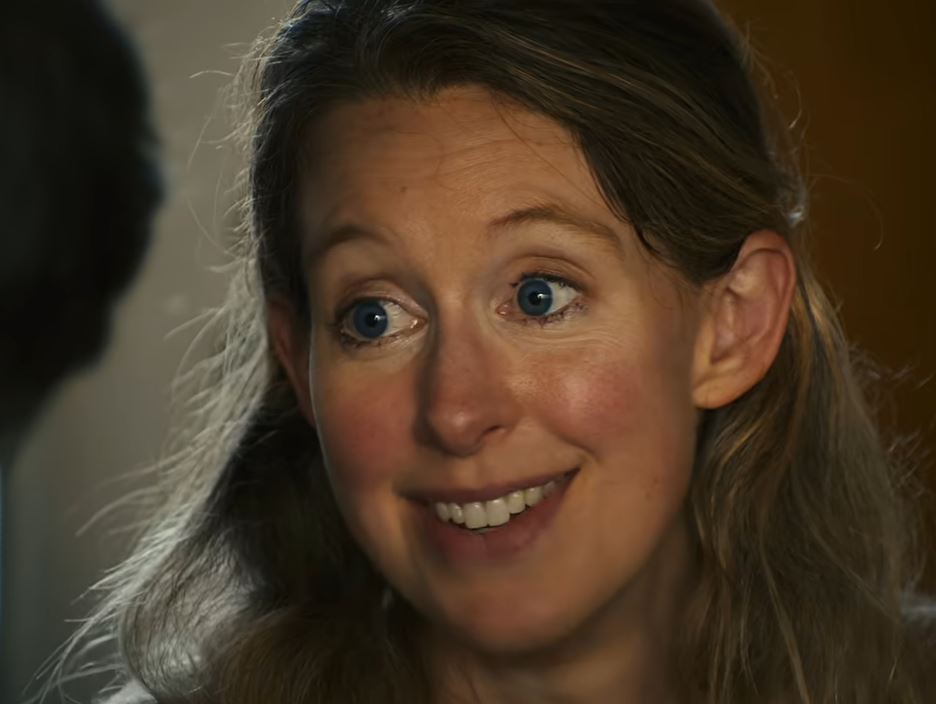
“Everything” reveals that Holmes actually has a kind of permanent grin kind of like in the “Smile” films, not wicked but kind of permanent. This draws comparisons to this film’s cousin, “Tucker: The Man and His Dream,” the 1988 Francis Coppola movie that is not a “documentary” and is made well after the fact but also concerns someone who found trouble for raising investor money for a new product. In “Tucker,” Jeff Bridges also has a permanent grin, which probably explains why Preston Tucker and Elizabeth Holmes are great salespersons, they appear to be smiling in every conversation.
Fielder’s look is not a grin, it’s an open-mouth “what’s going on here” in every conversation.
Besides “Everything,” another movie about a person convicted of financial crimes is Martin Scorsese’s “The Wolf of Wall Street.” That movie asserts that other people steered the protagonist down this path, that it was so easy for this person to bamboozle people, and it was so much fun doing it, that he couldn’t help himself. “Wolf,” “Tucker” and “Everything” are all less concerned about the victims than the protagonist’s mindset and sort of imply there’s a price — for others — to pay for being gullible.
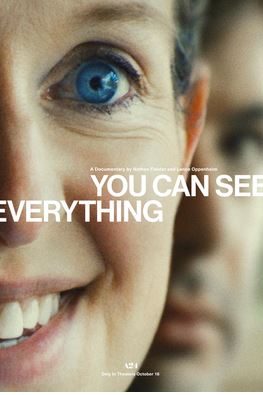
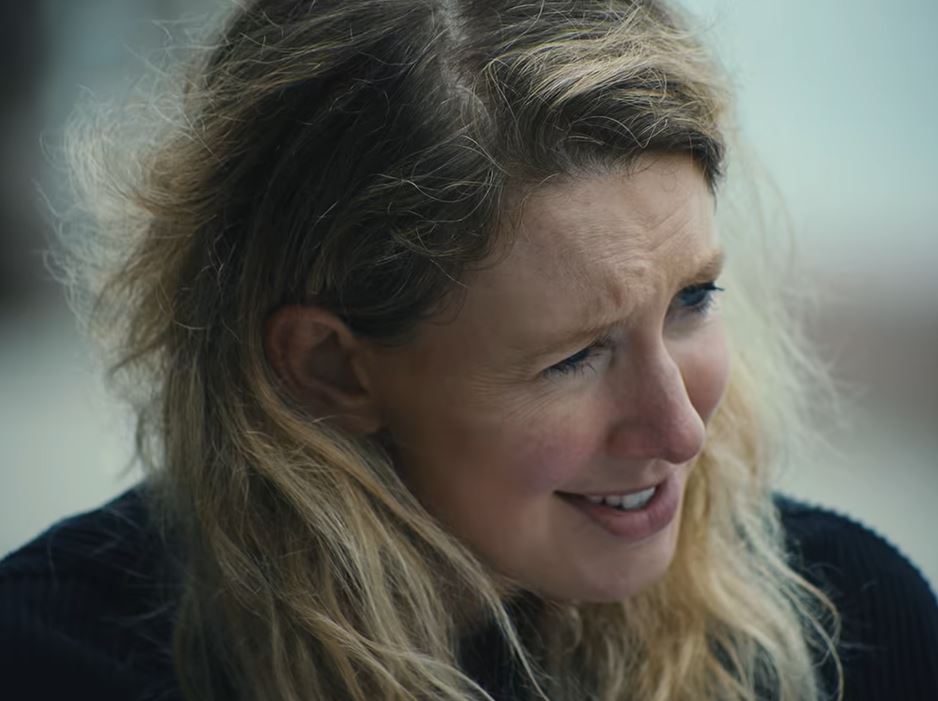
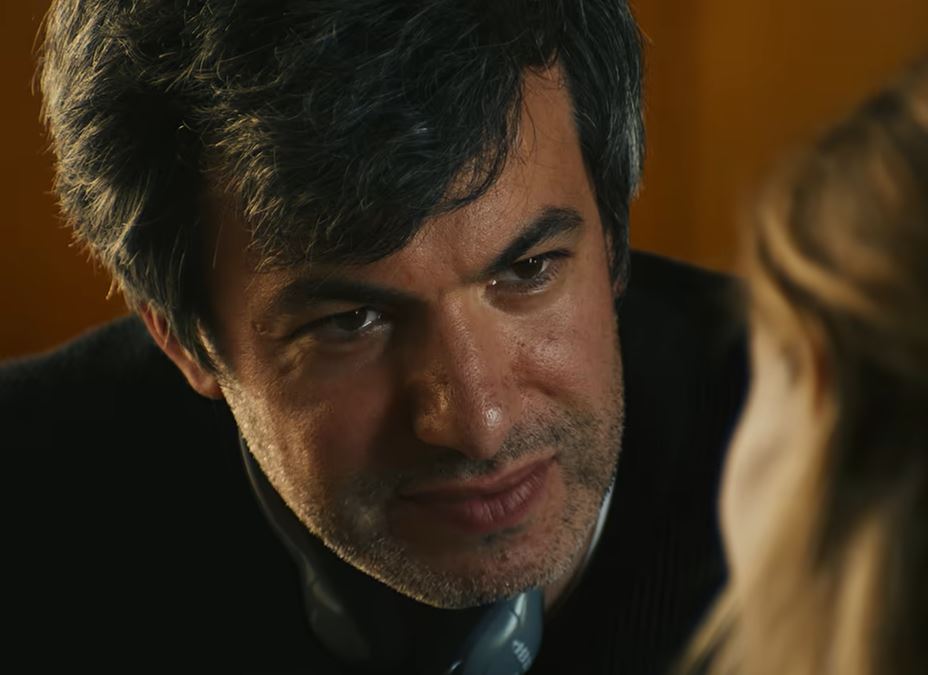
Any film of any kind relies on great photography and photogenic people. The cameras are often uncomfortably close to the faces in “You Can See Everything.” Elizabeth Holmes has beautiful hair. Had she skipped Stanford and tried Hollywood, she could’ve landed some shampoo commercials, or other commercials, maybe some TV parts, maybe even some secondary film roles. Fielder has great hair too. And skin that isn’t necessarily perfect.
Much of the first half is Fielder vs. Holmes in agape mouth posture as each tries to figure out what the other is talking about. Once the staredowns get old, the film, good to that point, kicks into overdrive and gets better.
Fully appreciating the movie requires some knowledge of Holmes’ case. Unfortunately not many details are explained, and the few details are told, not shown.
In the film — and this is Fielder’s smartest move — a third party will evaluate Holmes’ situation and defend that evaluation, and that is priceless. There is a fantastic but just-barely-started conversation here about the fairness of artistic license in films about real human beings. The conclusion of the film is that whatever beefs Holmes may have about the accuracy of media portrayals of her, she did it to herself.
The public might be forgiving of Holmes were she to demonstrate a commitment to making people healthier. Here, she had a chance. But Holmes makes little attempt to convince Fielder that her device really does work, or why it matters, and basically zero attempt to convince anyone she actually cares about curing/preventing diseases.
She’s a fundraiser, not an inventor. One expert said upon seeing the film that the way Holmes and Evans talk about the device is “total gibberish.” Clearly, the product in question doesn’t work, or else the big biotechs would long since have been all over it. Fielder’s film effectively suggests one fellow who looks like he should be retired and appears to be working out of his living room is the couple’s hope of resurrecting the business.
It’s not wrong to determine that “there’s no there there” and that Fielder’s work deserves at most 2 stars. His watchable film opens the door to intriguing speculation, for those inclined, and for that reason, it’s a significant achievement.
4 stars
(October 2026)
“You Can See Everything” (2026)
Featuring:
Elizabeth Holmes ♦
Nathan Fielder ♦
Billy Evans ♦
Amanda Seyfried ♦
Christopher Abbott ♦
Gary Wilmes ♦
Phillip Andre Botello ♦
Nick Choksi ♦
Lance Oppenheim
Directed by: Nathan Fielder
Directed by: Lance Oppenheim
Producer: Maggie Ambrose
Producer: Tatiana Bears
Producer: Jack Davis
Producer: Nathan Fielder
Producer: Lance Oppenheim
Co-producer: Eric Notarnicola
Co-producer: Abigail Rowe
Co-producer: David Shayne
Co-producer: Christian Vazquez
Executive producer: Emily Osborne
Music: Ari Balouzian
Cinematography: David Bolen
Editor: Adam Locke-Norton
Production design: Alex DiGerlando
Supervising art director: Molly Mikula
Art direction: Jonathan Mosca
Set decoration: Rebecca Meis
Costumes: Katina Danabassis
Production supervisor: Nicole Townsend
Unit production manager: Maggie Ambrose
Post-production supervisor: Rita Walsh
Executive in charge: Joshua Gonzales
Special thanks to: Jake Friedman
Special thanks to: Dave McCary
Special thanks: Emma Stone