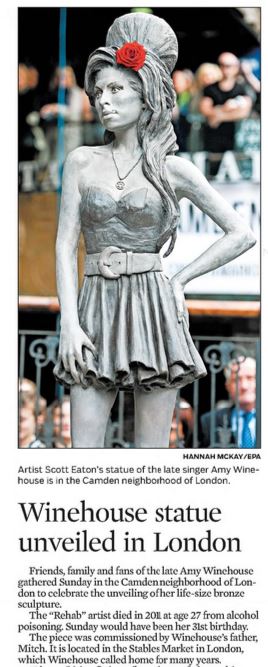
Asif Kapadia asserts — but
his movie doesn’t — that
‘Amy’ Winehouse deserves
a 3-letter epitaph
Among all of the voices in “Amy,” there is universal agreement on ... just about everything.
That almost defeats the purpose of Asif Kapadia’s 2015 feature film “documentary” on Amy Winehouse that is often lumped in with the batch of music biopics (perhaps Hollywood’s most popular genre of the 2000s) that have generally outperformed not only at the box office but with critical acclaim. Most of those productions serve as celebrations of artists and bands that had full or nearly full careers with a few notorious controversies. “Amy” is supposed to be about tragedy. But even it too can’t resist leaning tribute.
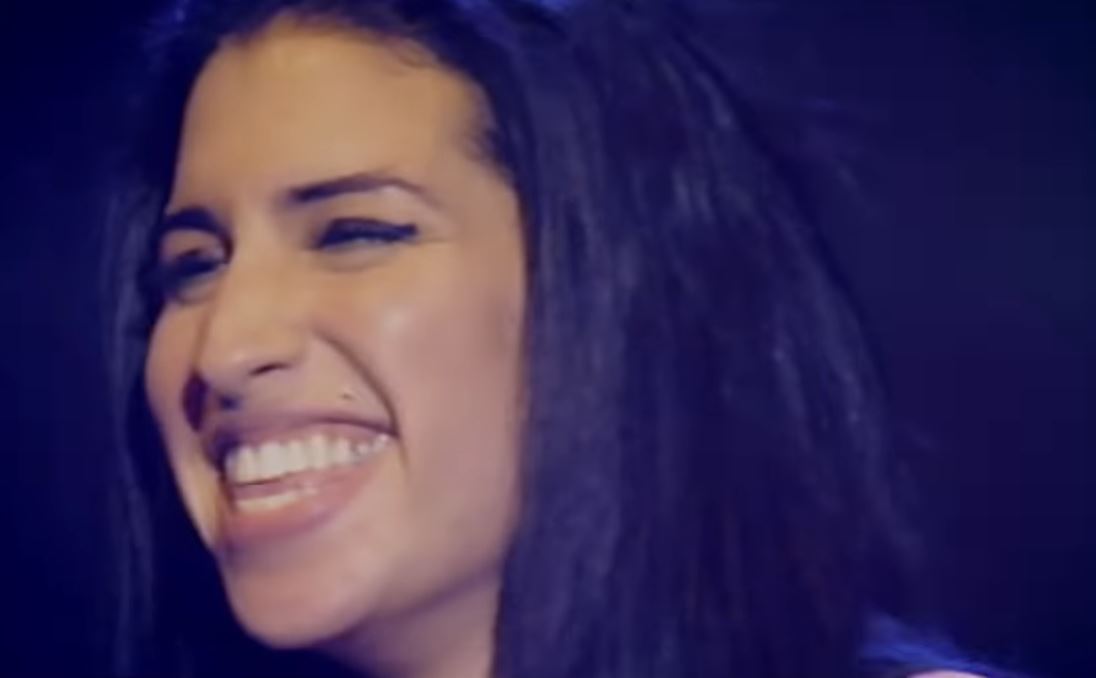
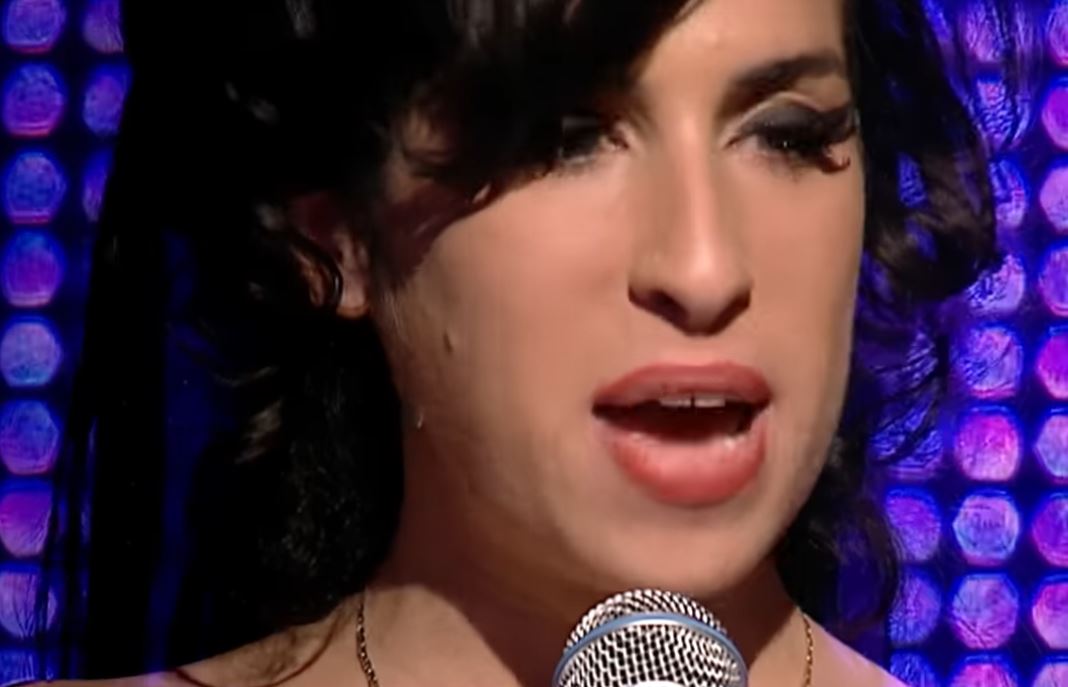
Kapadia puts together an impressive amount of interviews and research, but it turns up nothing more than what we already knew. In an interesting departure, Kapadia skips the common format of showing the interviewee. This is an impressive approach. Instead, he turns the interviews (clearly labeled with screen text, another strength) into narration of two hours of actual Winehouse footage. That footage — there is tons of it available, even though she emerged slightly before the YouTube era — is concentrated in the same places: Amy mugging for the camera backstage, or Amy entering/leaving a building. There’s just something about her. It’s hard to turn away.
Most addiction or analysis experts would probably say that this amount of media attention would be unhelpful, creating all kinds of additional pressure on someone with substance-abuse and other psychological issues. Is there any way the cameras might have actually helped? There is no argument either way in “Amy.” Yet in one chilling passage, we see her unable or unwilling to perform at a concert, barely even able to stand up. If the whole world knows someone is in trouble, someone should be able to help, right?
Sadly, not necessarily.
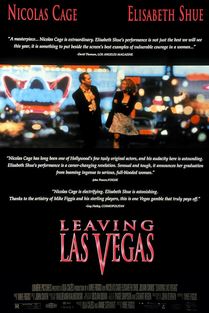
The meaning of “Amy” is going to veer far from the musical biopic into the category of something like “Leaving Las Vegas” — the person we want to help who just can’t be helped. For this, Kapadia nearly has a home run. But the key is “want.” This is nonfiction, and Kapadia can’t make the facts on the ground into something greater. The people in Amy’s universe quite frankly didn’t try hard enough. They do not, collectively, come across as evil. Almost all make clear that they wanted Amy to be sober, not drunk. But each has a role and seems confined to it — manager, producer, parent, friend, business associate. Lucian Grainge of Universal Music observes, “She had a complete infrastructure around her where everybody was doing everything for her.” Those people are, through no fault of their own, enablers. “Amy” does not test itself by asking whether these people could have done anything about it.
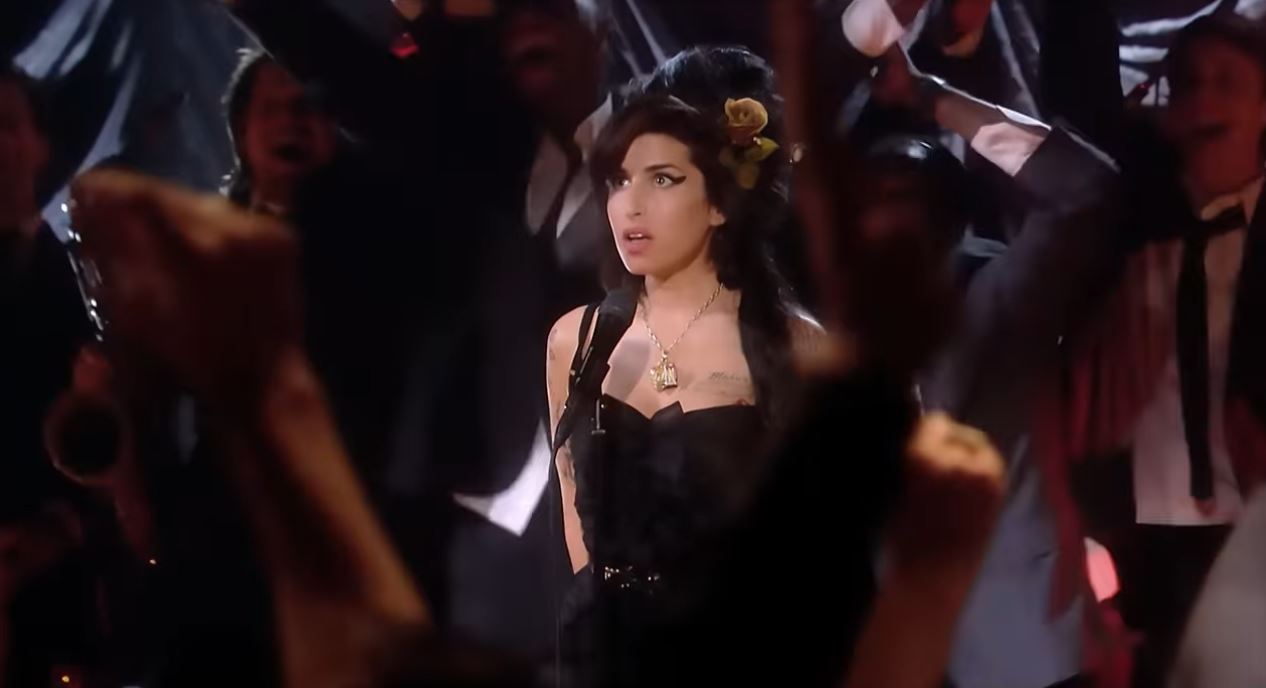
The most important comment in “Amy” is near the end, when a friend recounts being present at the gathering when Winehouse won a Grammy, announced by her idol, Tony Bennett, and Winehouse was actually clean and sober for this event but pulled the friend aside to reveal, “Jules, this is so boring without drugs.”
It’s fair to wonder how, after doing so much in the way of hard drugs, that Winehouse was done in by merely alcohol (5 times the legal limit of it). Among the most famous vices, the availability of alcohol is the chief problem here. Hard drugs carry serious legal risk. Promiscuity takes energy. Alcohol, compared with other vices, is completely easy and cheap.
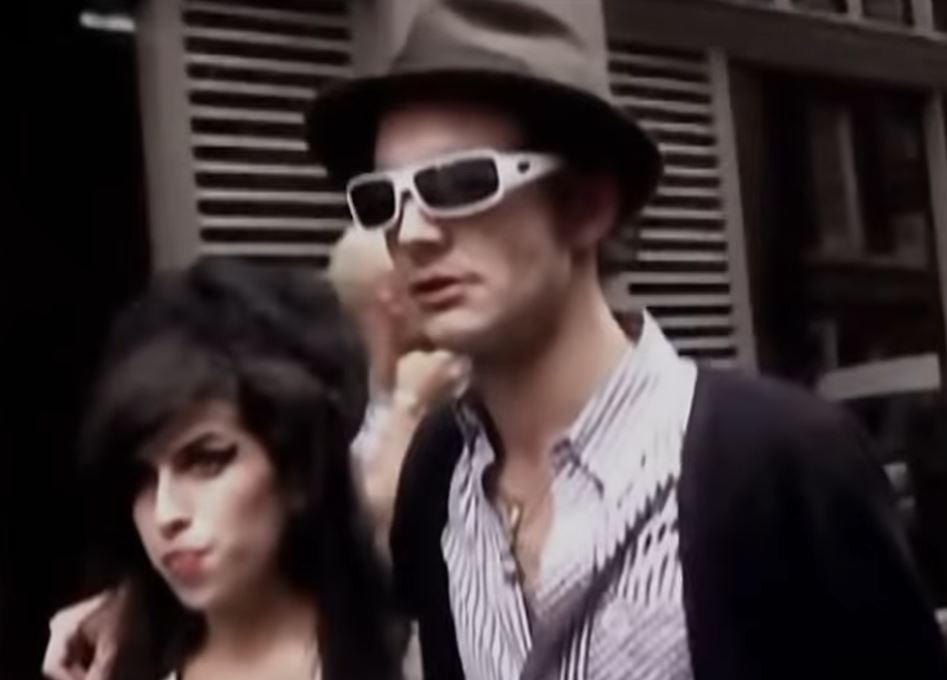
A broken family is often referenced as the cause of Amy’s dysfunction. Father was absent, and Amy was too precocious for her mother. Eventually father will return as a parasite. However, he’s a saint compared with Amy’s ex-husband, Blake Fielder-Civil, who seems oblivious to her talent and interested only in the partying that it enables. At one point he will list his attributes — “handsome,” goes to the gym, dresses well and “not on heroin” — and his belief in himself here will reflect very poorly, not so much on him, but Amy. Curiously, in concert footage that populates YouTube and also in the movie, Winehouse was often introduced as “Mrs. Amy Winehouse.”
Fielder-Civil is blamed in the film for leading her to drugs though she clearly had found them on some level anyway. He will claim in this film that heroin and cocaine made him feel good. Yet, “They weren’t happy souls when they were high,” one observer opines.
As observer after observer reflects on Amy’s troubles, Kapadia’s film incorrectly is telling us, “She’s helpable.”
Addiction experts might say that work, rather than attention, would help a person such as Amy Winehouse. Most troubled artists are at least motivated by the music. It’s never clear in “Amy” when Winehouse was actually working, nor does Kapadia spend any time on her level of education. There are notebooks shown with lyrics written, but nobody’s talking about grueling, hourslong shifts at the recording studio to get the latest song just right or demands to finish a new album. It sounds like she could tour whenever she needed the money. Her song lyrics point to a typical cliché for female music stars — a lot of material about relationship issues. Yet perhaps her most famous song is one that actually mocks the concept of rehab. Is there any surprise where this story is headed?
Winehouse’s dad, Mitch, is interviewed by Kapadia but takes issue with his portrayal, calling the filmmakers a “disgrace” and showing him in the “worst possible light.” The movie’s most damning account of Mitch is that, when Amy was finally relaxing at St. Lucia, he brought along his own reality TV camera crew to further his own interests and chides her for being less than enthusiastic about taking photos with fans. It’s disappointing behavior. But she could’ve stopped it.
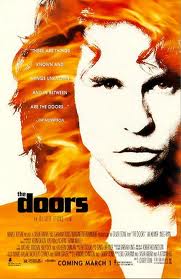
“Amy” is a fascinating comparison with Oliver Stone’s “The Doors.” Both are unfortunately chronological, a very uninspiring approach in each case, and conclude in tragedy.
There is a big difference — “The Doors” is a movie with actors and considerable artistic license, and much of the appeal of a movie like “The Doors” centers on how well the big star resembles the actual person. “Amy” does not have that curiosity.
The story arc, though, is quite similar. Jim Morrison and Amy Winehouse are rebel figures who are not classically trained musicians. That they will dominate levels of pop music the way they do suggests it is more about personality and performance than voice and songwriting and note-playing. And that the personality traits that hyperachieve in this profession are the same traits that damage ordinary lives.
“The Doors” is a quirky and somewhat controversial project, seen by many as little more than Stone’s fandom for the band. Stone says in interviews that he thinks Morrison was underappreciated, that he inspired the Vietnam generation, that he broke ground in popular music and pop culture, and what seems to rankle Stone the most is that other music stars did not support Morrison during his Florida obscenity case. In “Amy,” other than a few words of encouragement from Russell Brand (who has a host of legal issues), no stars are checking in on Winehouse.
Reliant on artistic license, Stone suggests repeatedly that Morrison was a noble artist — refusing to change lyrics on “The Ed Sullivan Show,” refusing to sell a song to an advertiser, unhappy with the demand for radio hits. Yes, there are moments in that film of Morrison being difficult or insufferable. Stone decides that Morrison had some kind of death wish (a bald character representing Death follows Morrison in parts of the film) that was triggered early in his life when he witnessed the souls of Native American victims of a car accident, though whether this car accident ever happened or whether the Morrison family noticed anything unusual about it is not known.
Kapadia doesn’t see the same kinds of supernatural effects on Amy Winehouse. He simply allows others to observe that Amy in her teen years was not unfamiliar with sex, alcohol, drugs, bulimia and swagger, all things that put her in territory where many people won’t go but where someone with a great voice and a certain attitude can thrive. When she did thrive, there was nothing to rein her in.
To help a person with these kinds of self-destructive issues, it seems someone has to take custody. Typically that would be a spouse. Given that Fielder-Civil does not come across as the most responsible figure, that’s kind of a non-starter here. For a troubled person not married, a parent or grandparent may feel compelled to step in, but that gets tricky if the subject is an adult. Business associates are the next level. Their livelihoods may depend on this person’s sobriety. But there’s only so many professional services they can provide or threaten to withhold. Friends? Winehouse, according to “Amy,” was blessed with real friends not in the music business who did care. They weren’t quite close enough, didn’t have enough emotional leverage to prompt change.
How good was she? It’s a great voice but a spectacular swagger. Those with the good fortune to witness one of her shows, when she was focused and trying, had to be mesmerized for hours. Tony Bennett in the film calls her “one of the truest jazz singers” with the “complete gift” who should be likened to Ella Fitzgerald and Billie Holiday. Rex Reed complains that Winehouse “was no jazz singer” and deems Bennett’s adulation as “about as dumb as nincompoopery can get.” Like many famous artists, Winehouse is kind of her own genre. Yet her production was limited. She is as famous for membership in the “27 Club” as for her work.
She had some of the World’s Most Beautiful Hair. Her look is attributed to the ’60s group The Ronettes and Elizabeth Taylor’s “Cleopatra.” She did not resemble a classic model but was — when as close to “natural” as possible and not wracked by eating disorder — undeniably gorgeous.
Rex Reed
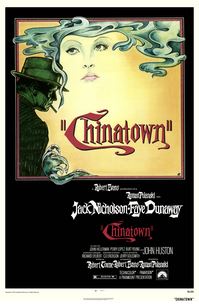
called “Amy” a “torturous but endlessly hypnotic experience.” Kapadia could’ve started at the end, and then brought back the details in flashbacks. This quite possibly would’ve been a superior approach. Why is this superstar unable to stand up at a concert? Or better yet, be like most movies, even documentaries — show us the protagonist in everyday life, hand them a problem, see if they can solve it. The ending would be something along the lines of “Chinatown,” as a concerned professional vows to help a woman, only to eventually realize the problem is too vast and complicated for him.
The title is a gamble. Amy Winehouse is surely the world’s most famous Amy, but her name is not as recognizable as, say, “Marilyn,” “Janis,” “Amelia” — all of whom are American and all of which may also be movie titles. Kapadia’s title choice implies he wants Amy Winehouse to have the same kind of presence. If he, or she, falls short, it feels like a reach. Kapadia, like Winehouse, is a Londoner. Hers is a story of international fame, but it’s also a distinctly London story (that means paparazzi are going to be blamed somewhere along the way) in which important nuances may be missed by viewers outside the U.K. Maybe the title shouldn’t be her first name alone. Impressively, Kapadia does not rely on a famous song title/lyrics here. “Amy” is the most ambitious of all the titles of the TV/movie productions — there are tons of them, and “Amy” risks getting obscured in the pile — about Winehouse’s life.
The ending credits that include photos while “Valerie” plays, of course are happy, to leave us with reminders of why we care. That’s probably the way that every music biopic ends. Showing people grieving from attending the memorial service doesn’t strike the right tone. Whatever went wrong with this person’s life, at least they were able to entertain complete strangers.
Hollywood smiled on Kapadia’s work. He and producer James Gay-Rees received the Oscar for Best Documentary Feature over contenders “Cartel Land,” “The Look of Silence,” “What Happened, Miss Simone?” and “Winter on Fire: Ukraine’s Fight for Freedom.” The win by “Amy” is an affirmation of Hollywood’s curious artistic appreciation of music biopics, sometimes knocked as having little more depth than the “VH-1: Behind the Music.”
(Then there’s ambiguity about tone ... When “Amy” won the Oscar, the upbeat music played as Kapadia and Gay-Rees came up to the stage was from her notorious “Rehab” song. Kapadia at the podium said Amy was “someone who needed looking after.”)
Preventing human beings from doing something bad is actually easier than getting them to behave, in general, in a way we prefer. The most vehement efforts involve people who are disturbing us, either physically or financially. Incarceration, restraining orders, fines are all possibilities for those people. For those who are simply breaking our hearts, we really don’t have any effective recourse that anyone’s comfortable with.
The only person who could’ve saved Amy Winehouse from herself would be a permanent babysitter. We’d like to think that those who provide so much entertainment would treat their work, and themselves, as seriously as their fans do. “Amy” shows us it doesn’t always happen. Life gave her multiple chances. Sobriety didn’t do anything for her. Yes, it’s our loss. More than that, it’s hers.
3.5 stars
(March 2026)
“Amy” (2015)
Cast:
Amy Winehouse as
Self
(archive footage) ♦
Lauren Gilbert as
Self ♦
Juliette Ashby as
Self ♦
Nick Shymansky as
Self ♦
Tyler James as
Self ♦
Guy Moot as
Self ♦
Chris Taylor as
Self
(archive footage) ♦
Nick Gatfield as
Self ♦
Ian Barter as
Self
(archive footage) ♦
Garry Mulholland as
Self
(archive footage) ♦
Jonathan Ross as
Self
(archive footage) ♦
Janis Winehouse as
Self ♦
Mitchell Winehouse as
Self ♦
Sam Beste as
Self ♦
Bobby Womack as
Self
(archive footage) ♦
Salaam Remi as
Self ♦
Def Mos as
Self ♦
Tim Kash as
Self
(archive footage) ♦
‘Spiky’ Phil Meynell as
Self ♦
Peter Doherty as
Self ♦
Blake Fielder as
Self ♦
Lucian Grainge as
Self ♦
Raye Cosbert as
Self ♦
Mark Ronson as
Self ♦
Darcus Beese as
Self ♦
Cynthia Winehouse as
Self
(archive footage) ♦
Russell Brand as
Self
(archive footage) ♦
Alex Clare as
Self ♦
David Letterman as
Self
(archive footage) ♦
Jay Leno as
Self
(archive footage) ♦
Monte Lipman as
Self ♦
Terry Richardson as
Self
(archive footage) ♦
Steve Kandell as
Self
(archive footage) ♦
Chip Somers as
Self ♦
Alex Foden as
Self
(archive footage) ♦
Natalie Cole as
Self
(archive footage) ♦
Tony Bennett as
Self ♦
Beyoncé as
Self
(archive footage) ♦
Foo Fighters as
Themselves
(archive footage) ♦
Rihanna as
Self
(archive footage) ♦
Jay-Z as
Self
(archive footage) ♦
Andrew Morris as
Self ♦
Frankie Boyle as
Self
(archive footage) ♦
Graham Norton as
Self
(archive footage) ♦
Blake Wood as
Self ♦
Shomari Dilon as
Self ♦
Questlove as
Self ♦
Reg Traviss as
Self
(archive footage) ♦
Cristina Romete as
Self ♦
Dale Davis as
Self ♦
Aiden Ashton as
Self ♦
Andrew Higgie as
Self
Directed by: Asif Kapadia
Producer: James Gay-Rees
Co-producer: George Pank
Executive producer: Adam Barker
Executive producer: David Joseph
Archive producer: Paul Bell
Music: Antonio Pinto
Cinematography: Rafael Bettega, Jake Clennell, Ernesto Herrmann, Randy Slavin
Editor: Chris King
Production manager: Raquel Alvarez
Thanks: Simon Amstell
Thanks: Robin Banerjee
Thanks: Kal Dhillon
Thanks: Marc Geiger
Thanks: Jacqueline Hurt
Thanks: Max Plaskow
Thanks: Steve Rolles
Thanks: Mik Whitnall
With thanks to: Matt Adams
With thanks to: Begoña Lopez
Special thanks: Bryan Adams
Special thanks: David Alamouti
Special thanks: Richard Cook
Special thanks: Jools Holland
Special thanks: Jackie Joseph
Special thanks: Violeta Thalia Kassapi
Special thanks: James King
Special thanks: Kelly Osbourne
Very special thanks: Andrew Higgie