The remarkable precedent of Apple’s free 2014 U2 download
How do you get a lot of people to listen to an album?
Download it for them for free.
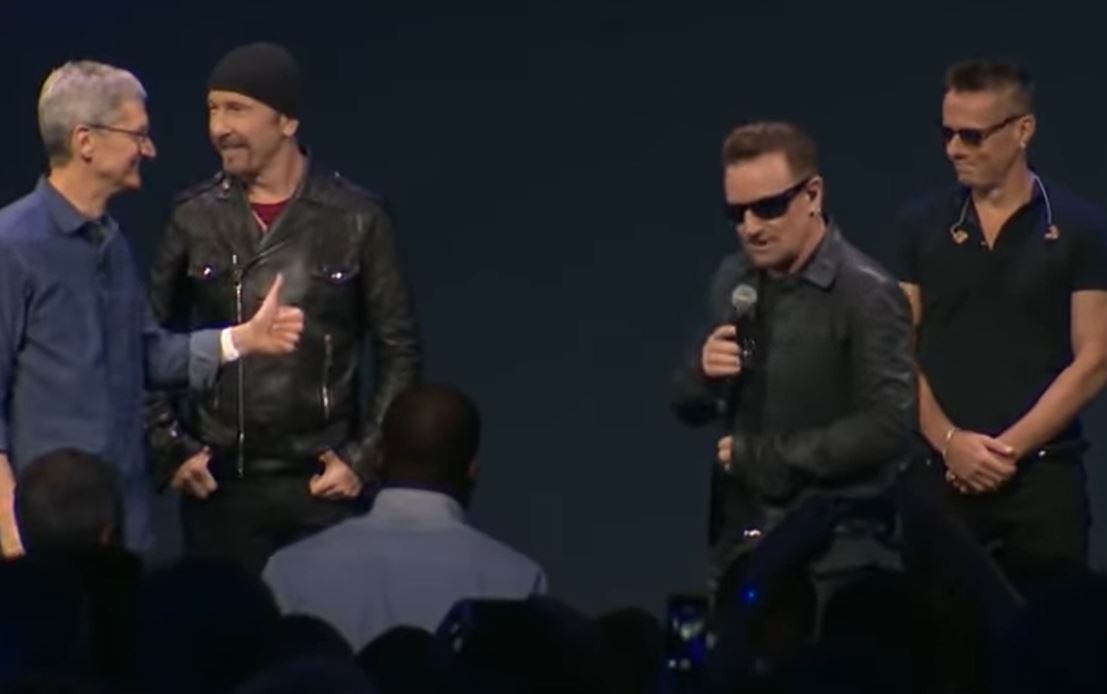
In 2014, U2 and Apple put together an idea to “gift” U2’s new album, “Songs of Innocence,” to the world — or at least everyone with an iTunes account.
The idea, Bono writes in 2022, is that Apple pays U2 for the album, then distributes it to customers for free. It would be a “wonderful” gift, Bono suggests, accompanying the launch of the latest iPhone.
Apple CEO Tim Cook expressed skepticism, both about giving artists’ work away for free (a longtime internet issue that Cook said Apple was trying to overcome) and also because “we’re not a subscription organization.”
Bono suggested providing the album for free would work like when Netflix buys a movie and makes the movie available to stream.
But, as the world came to realize, there’s a big difference between movies available to stream — and songs that invade your much more personal music library.
Apple not only gave away “Songs of Innocence” on Sept. 9, 2014 — it automatically dropped it into its iTunes customers’s accounts.
Whether they wanted it or not.
Enough didn’t, to the point that Bono was compelled to apologize a month later during a Facebook Q&A when a questioner complained that automatically downloading an album to people’s “playlists” was “really rude.” Bono responded, “I’m sorry about that,” suggesting “we kind of got carried away with ourselves.”
Other U2 members apparently “giggled at the question.” You might think that anyone complaining about receiving free, if unsolicited, music may have more important things to worry about.
But internet playlists, it’s evident, are kind of a sacred space.
The Guardian at the time calls the free download “a public relations debacle for Apple and U2.” It reports the chief gripes: “Thousands said it took up precious storage space on their devices. Many were just miffed that a band they didn’t like had foisted their work onto them.”
Greg Kot, rock critic of the Chicago Tribune, at the time calls the free download “not so much a ‘gift’ ... as an invasion.”
One of the revelations of this incident is that, great as U2 is (and they are very great), not everybody particularly cares for it or wants it. Even for free. That’s fair. If you forced a group of a hundred people to watch a handful of the greatest films ever made, a certain amount of those people are just not going to get it or appreciate the opportunity.
Then there’s this thing called Any Publicity Is Good Publicity. A week after the free download, the Chicago Tribune reports that interest in other U2 albums was surging: “Within two days, 17 albums had returned to the digital store’s Top 100.”
And a month later, Apple was talking up the impact. Apple Senior VP Eddy Cue told Billboard that more than 81 million Apple customers “experienced” songs from the album. Cue is quoted: “Prior to this, 14 million customers had purchased music from U2 since the opening of the iTunes Store in 2003.”
Apple’s move almost surely would’ve been objectionable no matter who the artist is. The fact it was a group of the stature of U2 perhaps implies some kind of hubris. Instead of, “Here’s music you may not have heard but might like,” it’s, “Here’s music we’re sure everyone’s gonna want.”
The Guardian quoted U2 manager Guy Oseary as saying, “If someone doesn’t like the gift, they should delete it.” But deleting it, according to The Guardian and others, “was easier said than done and Apple had to issue specific instructions to its customers about how to delete the offending songs.”
Which means that at the same time Apple was bestowing a “gift” of music, it was also making U2 likely the only artist to this day to be the subject of a corporate statement on how to get rid of its music.
(August 2026)